
Debt Mutual Funds Explained: Low-Risk Investing for Stable Returns
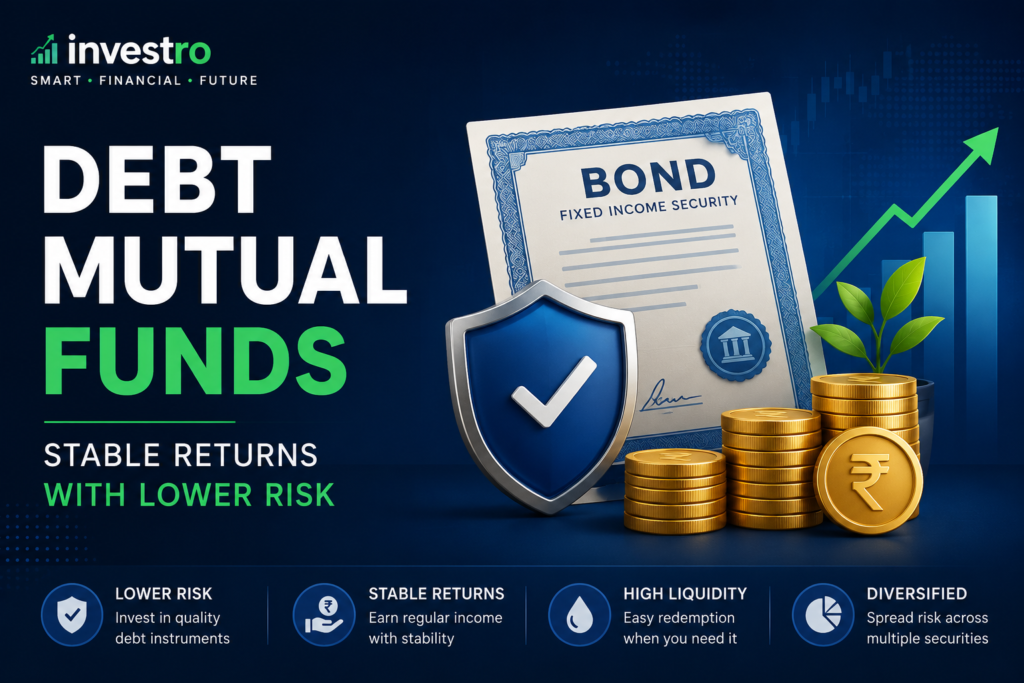
If you want your money to grow steadily without taking excessive market risk, debt mutual funds can be a useful option. These funds primarily invest in fixed-income instruments such as government securities, treasury bills, corporate bonds, and money market instruments. They are often chosen by investors seeking stability and predictable returns.
What Are Debt Mutual Funds?
Debt mutual funds are investment schemes that pool money from multiple investors and allocate it to fixed-income securities. Unlike equity funds, which invest in stocks, debt funds focus on preserving capital while generating regular income.
The fund manager selects various debt instruments depending on interest rate expectations, credit quality, and maturity periods.
How Debt Mutual Funds Work
Calculate While You Read
Free calculators related to this article — instant results, no signup.
When you invest in a debt fund, your money is distributed across different debt securities. The returns mainly come from interest earned on these instruments and, in some cases, capital appreciation when bond prices rise.
The performance of a debt fund is influenced by factors such as interest rates, inflation, credit quality, and market conditions.
Types of Debt Mutual Funds
Liquid Funds
Liquid funds invest in very short-term instruments and are suitable for parking surplus cash for a few days or months.
Short Duration Funds
These funds invest in debt instruments with shorter maturity periods and generally experience lower volatility.
Corporate Bond Funds
Corporate bond funds primarily invest in high-rated corporate debt securities to generate stable income.
Gilt Funds
Gilt funds invest mainly in government securities and carry minimal credit risk.
Advantages of Debt Mutual Funds
Better Liquidity
Most debt funds allow investors to redeem units easily, making them more flexible than certain traditional investment products.
Diversification
A single debt fund may hold multiple securities, reducing the impact of a single issuer’s default.
Professional Management
Experienced fund managers monitor market conditions and adjust portfolios accordingly.
Potentially Higher Returns Than Savings Accounts
Depending on market conditions and fund category, debt funds may offer returns that exceed traditional savings accounts.
Risks Associated with Debt Mutual Funds
Interest Rate Risk
Bond prices move inversely to interest rates. Rising interest rates can negatively affect fund values.
Credit Risk
If a company issuing a bond faces financial difficulty, the value of that bond may decline.
Liquidity Risk
Some securities may become difficult to sell during adverse market conditions.
Who Should Consider Debt Mutual Funds?
Debt mutual funds may be suitable for conservative investors, retirees seeking regular income, or individuals looking to diversify their portfolio beyond equities.
They can also be useful for short- to medium-term financial goals where capital preservation is an important consideration.
Debt Mutual Funds vs Fixed Deposits
Returns
Fixed deposits provide predetermined returns, whereas debt fund returns vary based on market conditions.
Liquidity
Debt funds generally offer easier access to funds compared with some fixed deposit products that impose penalties for early withdrawal.
Risk
Fixed deposits are usually considered safer, while debt funds carry market-related risks.
Tips Before Investing
- Define your investment horizon.
- Choose funds with strong credit quality.
- Review historical performance carefully.
- Understand associated risks and expenses.
- Align investments with your financial goals.
Conclusion
Debt mutual funds offer a balance between risk and return for investors seeking stability. While they are generally less volatile than equity funds, they are not risk-free. Understanding the different categories and associated risks can help investors make informed decisions and select funds that match their financial objectives.
This article is for educational purposes only and should not be considered financial advice. Consult a qualified financial professional before making investment decisions.
Explore Investro Tools
Frequently Asked Questions
Quick answers to common questions about this topic.
-
No. Debt mutual funds carry interest rate risk, credit risk, and liquidity risk, although they are generally less volatile than equity funds.
-
Most debt mutual funds offer liquidity, but some may have exit loads or specific redemption conditions.
-
It depends on your risk tolerance and investment goals. Debt funds offer market-linked returns, while fixed deposits provide guaranteed returns.
-
Liquid funds and short-duration funds are commonly considered for short-term investment needs.