
Mutual Funds vs Direct Stocks: Which Should You Choose in India?
When it comes to investing in equities, Indian investors generally have two paths to choose from — buying individual stocks directly or investing through mutual funds. Both approaches offer exposure to the stock market, but they differ significantly in terms of risk, effort, and expertise required.
What Are Mutual Funds and Direct Stocks?
Mutual funds pool money from multiple investors and are managed by professional fund managers who invest in a diversified portfolio of stocks, bonds, or other securities on behalf of investors.
Direct stock investing, on the other hand, involves buying individual company shares yourself through a Demat and trading account, giving you complete control over your investment choices.
How Mutual Funds Work
Calculate While You Read
Free calculators related to this article — instant results, no signup.
When you invest in a mutual fund, your money is combined with that of other investors and allocated across multiple securities by a professional fund manager based on the fund’s investment objective.
You earn returns through capital appreciation in the Net Asset Value (NAV) of the fund and, in some cases, dividend payouts distributed by the fund.
How Direct Stock Investing Works
When you invest directly in stocks, you select individual companies to invest in based on your own research and analysis. You hold these shares in your Demat account and earn returns through price appreciation and dividends paid by the company.
Unlike mutual funds, the responsibility of researching, monitoring, and deciding when to buy or sell rests entirely with you.
Key Differences Between Mutual Funds and Direct Stocks
Diversification
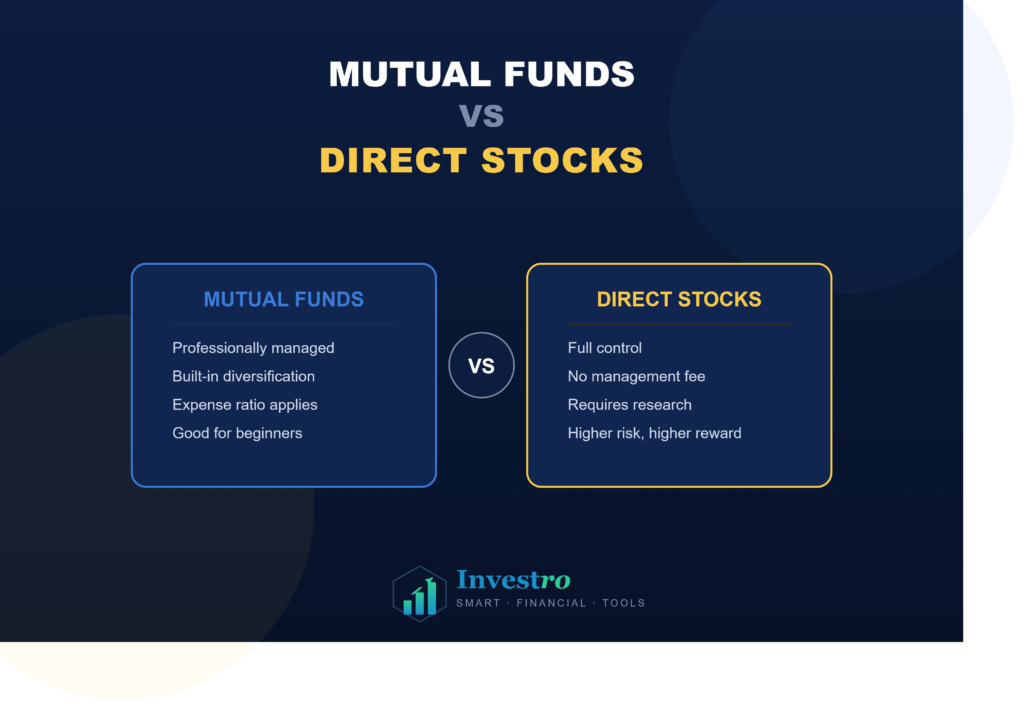
Mutual funds automatically diversify across multiple stocks and sectors, reducing the impact of any single company’s poor performance. Direct stock investing requires you to manually build a diversified portfolio.
Professional Management
Mutual funds are managed by experienced professionals who conduct research and make investment decisions. Direct stock investing requires you to do this research yourself or rely on your own judgment.
Cost Structure
Mutual funds charge an expense ratio for fund management, while direct stock investing involves brokerage fees and transaction charges but no ongoing management fee.
Control Over Investments
Direct stocks give you complete control to choose specific companies and time your entry and exit. Mutual funds offer limited control, as the fund manager makes these decisions.
Advantages of Mutual Funds
Built-In Diversification
A single mutual fund investment can give you exposure to dozens or even hundreds of stocks, significantly reducing concentration risk.
Professional Expertise
Fund managers conduct in-depth research and analysis, which can be valuable for investors who do not have the time or expertise to analyse individual companies.
Convenience
Mutual funds, especially through SIPs, allow for easy, automated, and disciplined investing without requiring active monitoring.
Advantages of Direct Stock Investing
No Expense Ratio
Direct stock investing does not involve an ongoing management fee, which can result in higher net returns over the long term if your stock picks perform well.
Full Control and Flexibility
You decide exactly which companies to invest in, how much to allocate, and when to buy or sell, offering complete flexibility based on your own research and conviction.
Potential for Higher Returns
Skilled stock pickers who identify strong companies early can potentially earn higher returns compared to the average mutual fund, though this comes with greater risk.
Risks to Consider
Mutual Fund Risks
Mutual funds are subject to market risk and fund manager performance risk. Returns depend on the fund manager’s decisions, and past performance does not guarantee future results.
Direct Stock Risks
Direct stock investing carries higher concentration risk, especially if your portfolio is not adequately diversified. Poor stock selection can lead to significant losses.
Who Should Choose Mutual Funds?
Mutual funds are well-suited for beginners, investors with limited time for research, or those who prefer a hands-off approach with professional management and built-in diversification.
Who Should Choose Direct Stocks?
Direct stock investing is more suitable for experienced investors who have the time, knowledge, and interest to research companies thoroughly and are comfortable taking on higher risk for potentially higher returns.
Can You Invest in Both?
Many investors choose a hybrid approach — building a core portfolio through mutual funds for diversification and stability, while allocating a smaller portion to direct stocks for companies they have strong conviction in.
Tips Before Choosing Your Investment Approach
- Assess your level of financial knowledge and the time you can dedicate to research.
- Start with mutual funds if you are a beginner, and gradually explore direct stocks as you gain experience.
- Never invest in a stock you do not understand, regardless of recommendations.
- Diversify across sectors if you choose direct stock investing.
- Consider a mix of both approaches to balance control and convenience.
Conclusion
Both mutual funds and direct stocks offer legitimate paths to building wealth through equity markets. The right choice depends on your financial knowledge, time availability, and risk appetite. Many successful investors use a combination of both to balance professional management with personal conviction.
This article is for educational purposes only and should not be considered financial advice. Consult a qualified financial professional before making any investment decisions.
Explore Investro Tools
Frequently Asked Questions
Quick answers to common questions about this topic.
-
Mutual funds are generally considered less risky than individual stocks due to diversification, but they are still subject to market risk and do not guarantee returns.
-
Yes, beginners can invest directly in stocks, but it is recommended to start with thorough research or begin with mutual funds to build market understanding first.
-
Yes, mutual funds charge an expense ratio for professional management, while direct stock investing only involves brokerage and transaction charges.
-
Yes, many investors use a hybrid approach, investing in mutual funds for diversification while also holding select direct stocks based on personal research.