
What is a Credit Score (CIBIL Score)? Meaning, Range and How to Improve It
A credit score (CIBIL score) is a 3-digit number between 300 and 900 that shows lenders how reliable you are at repaying debt. A higher score means faster loan approvals and lower interest rates. Check your score for free, understand what affects it, and learn practical steps to improve it.
Whenever you apply for a loan or a credit card, the very first thing a lender checks is your credit score. A good score can get you faster approvals and lower interest rates, while a poor one can lead to rejection. Understanding how your credit score works is one of the most useful things you can do for your financial health.
What Is a Credit Score?
A credit score is a 3-digit number, usually between 300 and 900, that represents your creditworthiness — how likely you are to repay borrowed money on time. It is calculated based on your credit history, which includes past loans, credit card usage, and repayment behaviour.
In India, credit scores are issued by credit bureaus such as TransUnion CIBIL, Experian, Equifax, and CRIF High Mark. The CIBIL score is the most widely used and referenced by banks and NBFCs.
How Is a Credit Score Calculated?
Calculate While You Read
Free calculators related to this article — instant results, no signup.
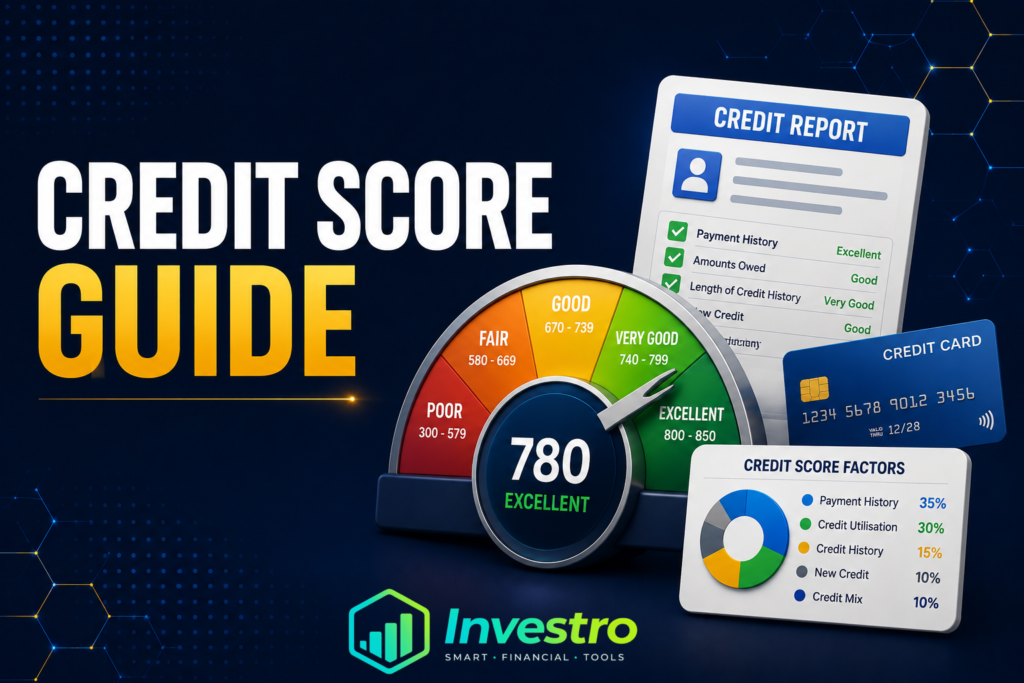
Credit bureaus use your credit report — a detailed record of your loans, credit cards, and repayment history — to calculate your score. While the exact formula varies by bureau, the score is broadly based on the following factors:
Payment History
This is the biggest factor. Timely repayment of EMIs and credit card bills has the strongest positive impact on your score, while missed or late payments hurt it significantly.
Credit Utilisation Ratio
This is the percentage of your total credit card limit that you are using. Keeping utilisation below 30% is generally considered healthy for your score.
Length of Credit History
A longer credit history gives bureaus more data to assess your reliability, which usually works in your favour, provided the history is positive.
Credit Mix
Having a healthy mix of secured loans (like home or car loans) and unsecured loans (like personal loans or credit cards) can positively influence your score.
Number of Credit Inquiries
Every time you apply for a loan or credit card, the lender makes a “hard inquiry” on your report. Too many inquiries in a short period can lower your score, as it signals credit-hungry behaviour.
What Is a Good CIBIL Score?
- 750–900: Excellent — high chances of quick loan approval at the best interest rates.
- 700–749: Good — most lenders will approve your application.
- 650–699: Fair — approval is possible but often at higher interest rates.
- Below 650: Poor — higher risk of rejection or need for a guarantor/co-applicant.
Why Does Your Credit Score Matter?
Faster Loan Approvals
A high credit score speeds up the approval process for home loans, personal loans, and car loans, as lenders see you as low-risk.
Lower Interest Rates
Borrowers with strong credit scores are often offered lower interest rates, which can save a significant amount over the loan tenure.
Higher Credit Card Limits
A good score can help you qualify for premium credit cards with higher limits and better rewards.
Better Negotiating Power
With a strong score, you are in a better position to negotiate loan terms, processing fees, and interest rates with lenders.
How to Check Your Credit Score
You can check your CIBIL score for free once a year directly from the CIBIL website, or anytime through most banking apps, PAN-linked financial platforms, and RBI-authorised credit bureau websites. Checking your own score is a “soft inquiry” and does not affect your score.
How to Improve Your Credit Score
- Pay all your EMIs and credit card bills on or before the due date, every time.
- Keep your credit card utilisation below 30% of the total limit.
- Avoid applying for multiple loans or credit cards within a short period.
- Maintain a healthy mix of secured and unsecured credit.
- Do not close your oldest credit card account, as it helps maintain credit history length.
- Check your credit report regularly for errors and get them corrected promptly.
Common Mistakes That Hurt Your Credit Score
Missing EMI or Bill Payments
Even a single missed payment can significantly lower your score and stay on your report for years.
Maxing Out Credit Cards
Using your entire credit limit signals financial stress to lenders and negatively affects your utilisation ratio.
Applying for Too Much Credit at Once
Multiple loan or credit card applications in a short span can make you appear credit-hungry, lowering your score.
Ignoring Credit Report Errors
Incorrect entries, such as loans you never took, can drag your score down if left uncorrected.
Conclusion
Your credit score is one of the most important numbers in your financial life. It directly affects your ability to borrow, the interest rate you pay, and how quickly you get approved. By paying on time, keeping your credit utilisation low, and monitoring your credit report regularly, you can build and maintain a strong score that works in your favour.
This article is for educational purposes only and should not be considered financial advice. Consult a qualified financial professional before making any borrowing decisions.
Explore Investro Tools
Frequently Asked Questions
Quick answers to common questions about this topic.
-
A CIBIL score of 750 or above is generally considered good for a home loan, giving you a higher chance of approval and better interest rates.
-
No. Checking your own credit score is a "soft inquiry" and has no impact on your score. Only "hard inquiries" made by lenders during loan applications can affect it.
-
Credit bureaus typically update your score every month, based on the latest data reported by banks and NBFCs.
-
It is possible but difficult. Lenders may approve a loan at a higher interest rate, ask for a guarantor, or reject the application altogether if the score is too low.