
50-30-20 Budget Rule: A Simple Way to Manage Your Money
Managing money effectively does not require a complicated spreadsheet or financial expertise. The 50-30-20 rule is one of the simplest and most popular budgeting methods that helps you divide your income into clear categories, making it easier to spend, save, and invest with purpose.
What Is the 50-30-20 Rule?
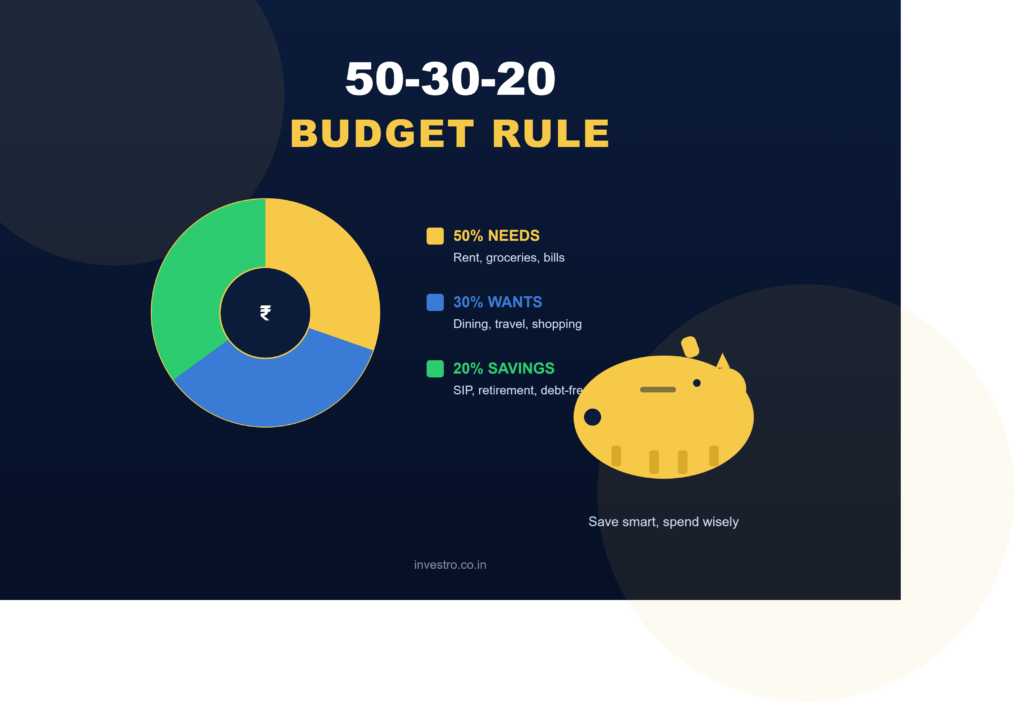
The 50-30-20 rule is a budgeting framework that divides your post-tax income into three categories — 50 percent for needs, 30 percent for wants, and 20 percent for savings and investments.
This simple split removes the guesswork from budgeting and gives you a clear structure to follow every month.
How the 50-30-20 Rule Works
Calculate While You Read
Free calculators related to this article — instant results, no signup.
Once you receive your monthly salary, you allocate it across the three categories based on the percentages. For example, if your monthly take-home income is ₹50,000, you would allocate ₹25,000 to needs, ₹15,000 to wants, and ₹10,000 to savings and investments.
Breaking Down the Three Categories
50% — Needs
This includes essential expenses you cannot avoid, such as rent or EMI, groceries, utility bills, transportation, insurance premiums, and minimum loan repayments.
30% — Wants
This covers discretionary spending that improves your lifestyle but is not essential, such as dining out, entertainment, shopping, subscriptions, and travel.
20% — Savings and Investments
This portion goes towards building your financial future — emergency fund contributions, SIP investments, retirement savings, and debt repayment beyond the minimum amount.
Advantages of the 50-30-20 Rule
Simple to Follow
Unlike detailed budgeting methods that track every rupee, the 50-30-20 rule only requires three broad categories, making it easy to maintain consistently.
Balances Spending and Saving
The rule ensures you enjoy your income today through the wants category while still committing a fixed portion to your financial future.
Flexible Across Income Levels
Whether you earn ₹30,000 or ₹3 lakh a month, the same percentage-based structure can be applied and adjusted to your situation.
Limitations to Consider
May Not Suit High Cost-of-Living Cities
In cities with high rent, the needs category may exceed 50 percent of income, requiring you to adjust the other two categories accordingly.
Not Ideal for Aggressive Savers
If your goal is early retirement or rapid wealth building, you may want to increase the savings percentage beyond 20 percent.
Does Not Account for Irregular Income
Freelancers or business owners with fluctuating monthly income may find it harder to apply fixed percentages consistently.
Who Should Use the 50-30-20 Rule?
This rule is best suited for salaried individuals with a stable monthly income who want a simple, low-effort way to start budgeting without tracking every single expense.
50-30-20 Rule vs Detailed Budgeting
Effort Required
The 50-30-20 rule requires minimal tracking, while detailed budgeting involves categorising and recording every expense, which takes more time and discipline.
Flexibility
The 50-30-20 rule offers broad flexibility within each category, whereas detailed budgets often set specific limits for individual expense types.
Best For
The 50-30-20 rule works well for beginners, while detailed budgeting suits those who want precise control over every spending category.
Tips to Apply the 50-30-20 Rule Effectively
- Calculate your post-tax monthly income and apply the percentages to find your category amounts.
- Automate your 20% savings through SIPs or recurring deposits right after you receive your salary.
- Track your needs and wants for one month to see how closely your actual spending matches the rule.
- Adjust the percentages slightly if your city’s cost of living is high, without compromising on savings.
- Review your budget every few months as your income or expenses change.
Conclusion
The 50-30-20 rule offers a simple, practical starting point for anyone looking to take control of their finances without complicated tracking. By dividing your income into needs, wants, and savings, you create a balanced approach that supports both your present lifestyle and your future financial security.
This article is for educational purposes only and should not be considered financial advice. Consult a qualified financial professional for personalised guidance.
Explore Investro Tools
Frequently Asked Questions
Quick answers to common questions about this topic.
-
The 50-30-20 rule is applied to your post-tax, take-home income, not your gross salary before deductions.
-
Yes, the percentages can be adjusted based on your city, income level, and financial goals. Some people prefer a 50-20-30 or 40-30-30 split.
-
If your essential expenses exceed 50%, try reducing wants temporarily and look for ways to lower fixed costs like rent or EMI commitments.
-
Yes, it is one of the easiest budgeting methods for beginners since it requires minimal tracking and provides a clear, simple structure.