How to File Income Tax Return (ITR) in India: Step-by-Step Guide
Filing your Income Tax Return (ITR) is mandatory once your income crosses the basic exemption limit, and doing it correctly helps you claim refunds, avoid penalties, and build a clean financial record. This guide walks you through choosing the right ITR form, gathering documents, and e-filing step by step for FY 2024-25.
Filing an Income Tax Return (ITR) is an annual exercise for every taxpayer in India, whether you are a salaried employee, a freelancer, or a business owner. Beyond being a legal requirement once your income crosses the basic exemption limit, filing your ITR on time helps you claim refunds, carry forward losses, and maintain proof of income for loans, visas, and other financial needs.
Who Needs to File an ITR?
You are required to file an ITR if your total income before deductions exceeds the basic exemption limit under either tax regime, even if your final tax liability after deductions is nil. Filing is also mandatory in specific cases such as depositing more than ₹1 crore in a current account, spending over ₹2 lakh on foreign travel, or holding foreign assets, regardless of your income level. Many taxpayers also file voluntarily to claim a TDS refund or to have documented income proof for loan and visa applications.
Choosing the Right ITR Form
Calculate While You Read
Free calculators related to this article — instant results, no signup.
ITR-1 (Sahaj)
For resident individuals with income up to ₹50 lakh from salary, one house property, and other sources like interest income. Not applicable if you have capital gains or foreign income.
ITR-2
For individuals and HUFs with income from salary, house property, capital gains, and foreign assets, but no income from business or profession.
ITR-3
For individuals and HUFs with income from a proprietary business or profession.
ITR-4 (Sugam)
For individuals, HUFs, and firms (other than LLPs) with presumptive income from business or profession, and total income up to ₹50 lakh.
Documents You Will Need
- PAN and Aadhaar
- Form 16 (from your employer, for salaried individuals)
- Form 26AS and Annual Information Statement (AIS) — to verify TDS and reported income
- Bank account statements and interest certificates
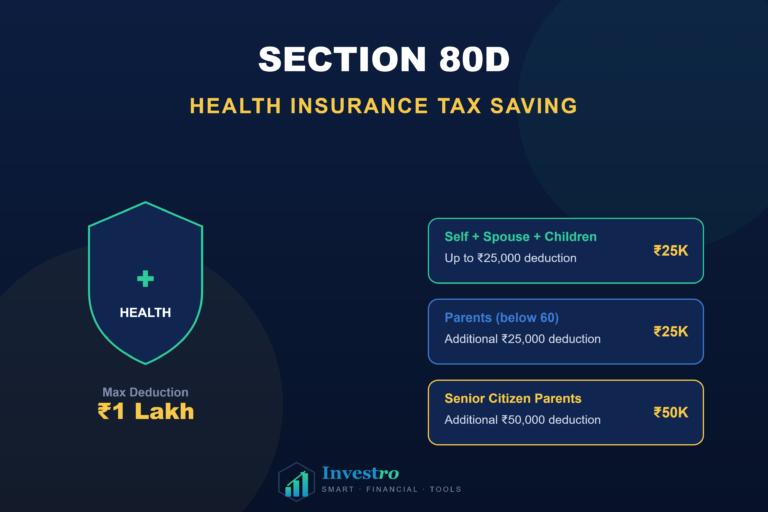
- Investment proofs for deductions (80C, 80D, home loan interest, etc.)
- Capital gains statements, if you sold stocks, mutual funds, or property
Step-by-Step: How to File Your ITR Online
- Log in to the e-filing portal at incometax.gov.in using your PAN as the user ID.
- Choose “File Income Tax Return” and select the correct assessment year.
- Select your ITR form based on your income sources, as outlined above.
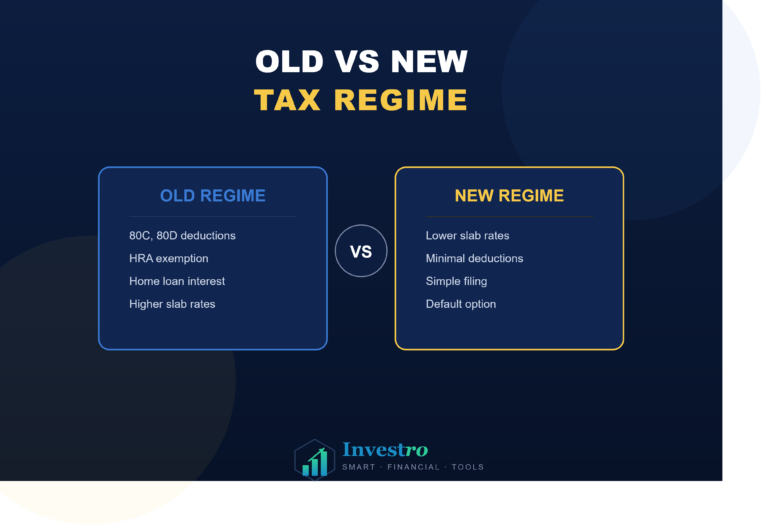
- Choose your tax regime — old or new — after comparing which one results in lower tax outgo.
- Pre-fill and verify details — the portal auto-fills salary, TDS, and interest data from Form 26AS and AIS; cross-check every figure against your own records.
- Claim eligible deductions such as Section 80C, 80D, and HRA, and enter any additional income not pre-filled.
- Review the computed tax and pay any balance tax due before submitting.
- Submit and e-verify your return within 30 days using Aadhaar OTP, net banking, or a Demat account — an unverified return is treated as not filed.
Common Mistakes to Avoid
- Mismatched income figures between Form 26AS/AIS and the return, which can trigger a notice
- Forgetting to report interest income from savings accounts and fixed deposits
- Choosing the wrong ITR form for your income type
- Missing the e-verification step after submission
- Filing after the due date and losing the option to carry forward certain losses
What Happens If You Miss the Deadline?
A belated return can still be filed after the due date, but with a late fee under Section 234F and interest on any unpaid tax under Section 234A. You also lose the ability to carry forward business or capital losses (except house property loss) to future years, so filing on time is always better than filing late.
Conclusion
Filing your ITR does not need to be stressful once you know which form applies to you and have your documents ready. Cross-check your pre-filled data against Form 26AS and AIS, claim every deduction you are eligible for, and always complete e-verification to close the loop. Filing on time keeps you penalty-free and gives you a clean income record for every financial milestone ahead.
This article is for educational purposes only and should not be considered tax or investment advice. Please consult a qualified chartered accountant or tax advisor for guidance specific to your situation.
Explore Investro Tools
Frequently Asked Questions
Quick answers to common questions about this topic.
-
Not always, but it is mandatory in specific cases such as high-value foreign travel spends, large current account deposits, or holding foreign assets, even if your income is below the exemption limit. Many people also file voluntarily to claim refunds or maintain income proof.
-
Form 26AS shows tax deducted or collected on your behalf (TDS/TCS), while the Annual Information Statement (AIS) is a more comprehensive report that also includes interest, dividends, mutual fund transactions, and other financial information reported to the tax department.
-
Salaried individuals without business income can choose between the old and new regime every year at the time of filing. Those with business or professional income have restricted switching options and should check the current rules before deciding.
-
An ITR that is not e-verified within 30 days of filing is treated as if it was never filed. You will need to file a fresh return, which may attract late fees if the original due date has passed.