Section 80D Explained: Save Tax on Health Insurance Premiums
Section 80D lets you claim tax deductions on health insurance premiums for yourself, spouse, children, and parents — separate from the ₹1.5 lakh Section 80C limit. Deduction limits range from ₹25,000 to ₹1 lakh depending on age, plus an extra ₹5,000 for preventive health check-ups.
Most people focus on Section 80C when planning their taxes, but Section 80D offers an equally valuable deduction that is often overlooked. If you pay health insurance premiums for yourself or your family, you are likely eligible for a significant tax deduction under this provision.
What Is Section 80D?
Section 80D of the Income Tax Act allows individuals and Hindu Undivided Families (HUFs) to claim a deduction on the premiums paid for health insurance policies. This deduction is available over and above the ₹1.5 lakh limit under Section 80C, making it an additional opportunity to reduce your taxable income.
How Section 80D Works
Calculate While You Read
Free calculators related to this article — instant results, no signup.
The deduction under Section 80D is based on health insurance premiums paid during the financial year for yourself, your spouse, dependent children, and parents. The amount you can claim depends on the age of the insured individuals and the policies you hold.
The premium must be paid through any mode other than cash to be eligible for the deduction.
Deduction Limits Under Section 80D
Self, Spouse and Dependent Children
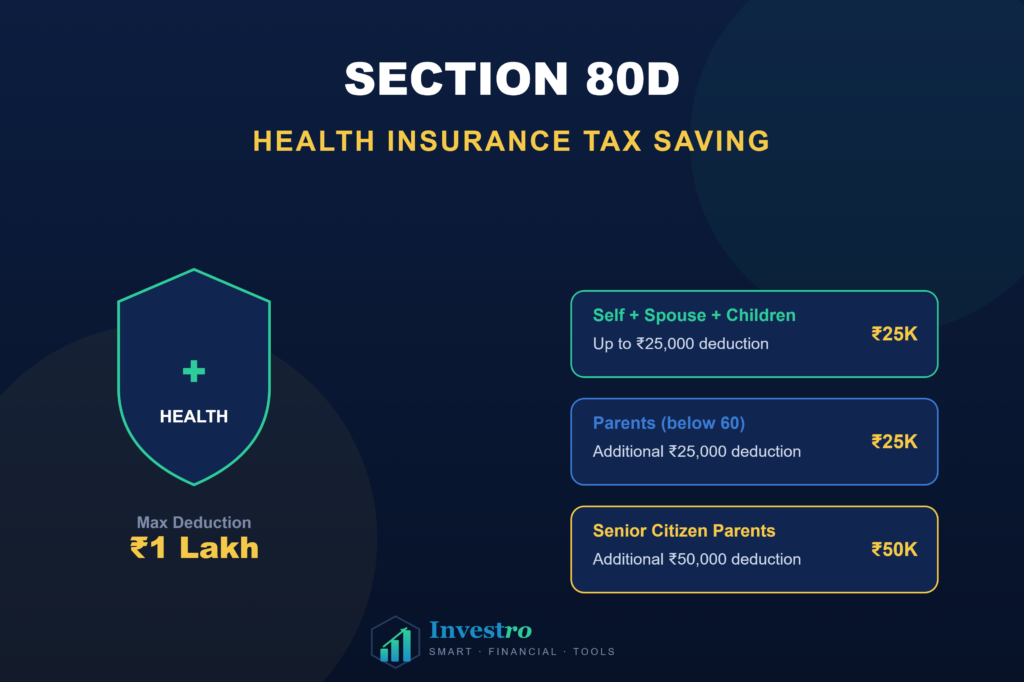
You can claim a deduction of up to ₹25,000 per year for health insurance premiums paid for yourself, your spouse, and your dependent children. If you or your spouse are senior citizens (aged 60 or above), this limit increases to ₹50,000.
Parents
An additional deduction of up to ₹25,000 is available for health insurance premiums paid for your parents. If your parents are senior citizens, this limit increases to ₹50,000.
Maximum Combined Deduction
If both you and your parents are below 60 years of age, the maximum combined deduction is ₹50,000. If your parents are senior citizens, the combined limit goes up to ₹75,000. If both you and your parents are senior citizens, the total deduction can go up to ₹1 lakh.
Preventive Health Check-Up Deduction
Within the overall Section 80D limit, you can also claim a deduction of up to ₹5,000 for preventive health check-up expenses for yourself, your spouse, dependent children, or parents. This deduction can be claimed even if the payment is made in cash.
Advantages of Claiming Section 80D
Additional Deduction Beyond 80C
Since Section 80D is separate from Section 80C, it provides an additional layer of tax saving without competing with your existing 80C investments.
Encourages Health Coverage
The deduction incentivises individuals to buy adequate health insurance, which provides financial protection against unexpected medical expenses.
Benefit for Senior Citizen Parents
The higher deduction limit for senior citizen parents makes it financially beneficial to pay their health insurance premium, reducing your overall tax liability significantly.
Who Can Claim Section 80D?
Any individual taxpayer or HUF that pays health insurance premiums for eligible family members can claim the Section 80D deduction. Premiums paid for siblings, grandparents, or in-laws are not eligible for this deduction.
Section 80D vs Section 80C
Limit
Section 80C has a combined deduction limit of ₹1.5 lakh across multiple instruments, while Section 80D provides a separate deduction of up to ₹1 lakh depending on your situation.
Instruments Covered
Section 80C covers a wide range of investment and savings instruments, while Section 80D is specifically limited to health insurance premiums and preventive check-up expenses.
Cumulative Benefit
Both deductions can be claimed simultaneously, allowing you to reduce your taxable income by up to ₹2.5 lakh when both limits are fully utilised.
Common Mistakes to Avoid
Paying Premium in Cash
Premiums paid in cash are not eligible for Section 80D deduction, except for preventive health check-ups. Always pay through net banking, UPI, cheque, or card.
Not Including Parents in the Policy
Many taxpayers miss out on the additional deduction available for parents. If your parents do not have health insurance, consider taking a policy for them to maximise your tax benefit.
Overlooking the Preventive Check-Up Benefit
The ₹5,000 deduction for preventive health check-ups within the Section 80D limit is often missed. Keep receipts of any health check-up expenses during the year.
Tips to Maximise Section 80D Benefits
- Buy a separate health insurance policy for your parents to claim the additional deduction.
- Opt for a family floater policy to cover yourself, spouse, and children under one premium.
- Always pay premiums through digital modes to ensure eligibility for the deduction.
- Keep all premium receipts and policy documents ready for submission to your employer or ITR filing.
- Schedule preventive health check-ups annually and retain the bills for the ₹5,000 deduction.
Conclusion
Section 80D is one of the most practical and beneficial tax-saving provisions in India. It not only reduces your tax liability but also encourages you to protect yourself and your family with adequate health insurance coverage. By fully utilising this deduction alongside Section 80C, you can significantly lower your annual tax outgo.
This article is for educational purposes only and should not be considered financial or tax advice. Consult a qualified tax professional for personalised guidance.
Explore Investro Tools
Frequently Asked Questions
Quick answers to common questions about this topic.
-
Yes, premiums paid for your spouse's health insurance are eligible for deduction under Section 80D within the overall limit applicable to you and your family.
-
No, Section 80D deductions are not available under the new tax regime. You can only claim this deduction if you opt for the old tax regime.
-
No, Section 80D deduction is only available for premiums paid for yourself, your spouse, dependent children, and parents. In-laws are not covered under this provision.
-
The maximum deduction under Section 80D is ₹1 lakh — ₹50,000 for yourself and your spouse (if senior citizens) and ₹50,000 for senior citizen parents.